Artificial Intelligence and Digital Transformation in Kazakhstan: An Assessment Based on President Tokayev’s State of the Nation Address
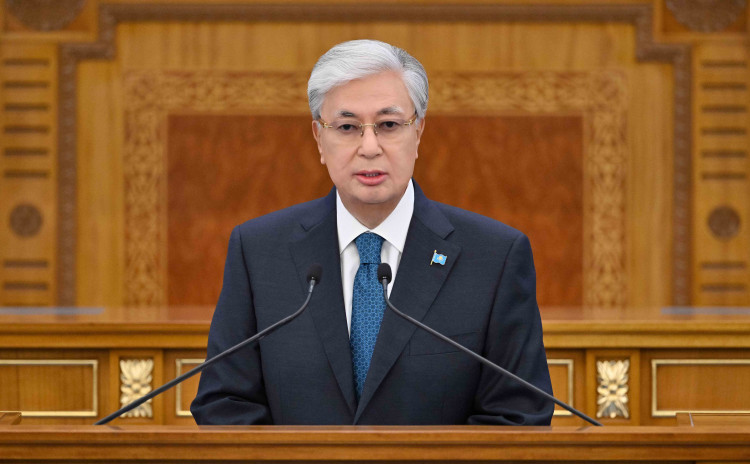
On 8 September 2025, President Kassym-Jomart Tokayev delivered his State of the Nation Address to both chambers of Parliament under the title “Kazakhstan in the Era of Artificial Intelligence: Current Challenges and Solutions through Digital Transformation.” The speech moved the country’s digital push beyond a narrow technical modernization agenda and tied it to an integrated development vision across the economy, education, and science and research. It outlined a framework built on interlocking pillars: the institutionalization of data-driven governance, the horizontal integration of artificial intelligence (AI) across all sectors, the acceleration of digital finance–legal architecture, and the simultaneous strengthening of infrastructure and human-capital capacity (Akorda, 2025).
In recent years, progress in AI has gathered extraordinary momentum. Within a short period, large language models (LLMs) and generative AI have reorganized access to knowledge while speeding up research and production processes across a wide spectrum—from design and biomedicine to materials science and climate modeling. Adoption rates at the firm level have climbed and model-development cycles have shortened; yet new regulatory needs have emerged around computing costs and data governance. Data from 2025 point to the pronounced weight of industry in building frontier models, the concentration of capital–talent–compute in a handful of hubs, and a rapidly narrowing performance gap between open-weight and closed-weight systems (Stanford HAI, 2025). The implication is clear: countries must aim not only to use technology but also to produce and govern it—bringing political economy, energy, education, and law into a single policy conversation.
In the global race, the United States (US) and China lead through economies of scale in the cloud–hardware–model stack and heavy research and development (R&D) investment, while the European Union (EU) is expanding its capacity to shape international norms via a risk-based regulatory architecture. Market indicators show tightening vertical ties between model providers and infrastructure providers, which in turn demands synchronized strategies across hardware and software layers (Organisation for Economic Co-operation and Development – OECD, 2025). Meanwhile, the rising power demand and cooling requirements of data centres are turning AI’s relationship with energy systems into a strategic issue; looking to 2030, the sustainability of compute infrastructure must be assessed not only in cost terms but also through carbon footprint and grid flexibility (International Energy Agency – IEA, 2025). In short, AI has become a “cumulative public policy domain” in which accelerating innovation rhythms and mounting infrastructure–governance needs must be addressed together.
The Central Asian context reflects this broader picture, but the region’s transport–energy hub dynamics, human-capital profiles, and differing speeds of public digitalization accentuate cross-country divergence. Here Kazakhstan starts from a position of strength: ranking 24th globally in the United Nations E-Government Development Index (EGDI) in 2024 signals that digital public services rest on a mature base and that institutional capacity for data-driven administration is relatively well established (Qazinform, 2024). The country’s geography, energy infrastructure, and fiscal–administrative set-up also provide a favourable ecosystem for AI to generate tangible outcomes in strategic verticals such as industry, mining–metallurgy, agriculture, and logistics.
Kazakhstan’s AI ecosystem in 2025 coalesces around three layers. The first is human capital: making AI a compulsory course across all universities—accompanied by the launch of new programmes in 93 universities and 20 institutions and by adjustments in secondary education that include teacher training—has accelerated general AI literacy (Astana Times, 2025a). This broad base is diffusing into civil society through free, peer-learning programmes such as QazCoders and the 01Edu-based “Tomorrow School” (Astana Hub, 2025b). The second layer is research and innovation: the Institute of Smart Systems and Artificial Intelligence (ISSAI) at Nazarbayev University has advanced the KAZ-LLM (Large Language Model) initiative and the KazMMLU (Kazakhstan Multitask Language Understanding benchmark), enabling the development of localized models in Kazakh, Russian, and regional knowledge domains (ISSAI, 2024). The third layer is infrastructure: the new national supercomputer running on NVIDIA H200 clusters gives researchers and entrepreneurs the capacity to train and serve models domestically—an important step for model sovereignty and data security (Euronews Next, 2025).
This triptych becomes clearer when read alongside the policy architecture laid out in Tokayev’s address. The speech’s internal logic expresses a will to centralize and coordinate along the axes of “institutions–law–finance.” First, the restructuring of the Ministry of Digital Development, Innovation and Aerospace Industry into a dedicated “Ministry of Artificial Intelligence and Digital Development” signals cabinet-level coordination of AI, enabling rapid alignment across horizontal decision domains—from public procurement to data-sharing protocols (Tengrinews, 2025). Second, accelerating work on a comprehensive “Digital Code” aims to consolidate fragmented regulations under a single roof for AI, big data, and the platform economy; conducting the process in multiple languages through open public consultation is critical for both enforceability and updatability (Qazinform, 2025d). Third, expanding the use of the digital tenge in public projects and instructing the creation of a “Digital Assets Fund” indicate that transparent budget management and diversified innovation finance tools will be deployed in tandem (Qazinform, 2025e). In addition, the special status of Alatau City—an “intelligent city” acting as a regulatory sandbox—is designed to provide a testbed for the controlled scaling of digital finance, the data economy, and trustworthy AI applications (Qazinform, 2025g). The Government’s approval of a National Action Plan following the address places these items on a concrete timeline, enabling a policy cycle built on speed and accountability (Government of Kazakhstan / PrimeMinister.kz, 2025).
The address also specifies the levers of economic transformation. With respect to cross-sector productivity gains and the creation of new product–service lines, the public sector is the largest potential “first customer.” Rapid, measurable wins are feasible in clinical decision support in healthcare, safe-efficient traffic management in transport, predictive maintenance in energy and mining, and anti-fraud analytics in taxation and customs. For that reason, human-capital priorities extend well beyond universities: micro-credentials (short, job-relevant certificates), in-service training, and flexible vocational pathways can lower adoption costs for small and medium-sized enterprises (SMEs) and domestic suppliers. The Government’s target to attract 10,000 AI specialists annually is an open call within the global competition for talent (Astana Times, 2025c). Institutions such as the national supercomputer and ISSAI function as shared infrastructure between universities, industry, and the public sector, reducing friction along the chain from R&D to productization. In this way, the productivity and transparency goals stressed throughout Tokayev’s speech are tied to concrete technology–policy instruments (Astana Times, 2025d).
Read as a whole, Kazakhstan’s 2025 panorama reveals three strategic convergences. First, the “infrastructure–talent–language” convergence: the co-expansion of local language models and high-performance compute will raise the quality of Kazakh–Russian bilingual services in both public and private sectors while reducing external dependencies (ISSAI, 2024). Second, the “law–finance–data” convergence: moving the Digital Code and an AI Law in parallel with the digital tenge and a Digital Assets Fund will both set the rules of the data economy and equip innovation finance with flexible tools (Qazinform, 2025f). Third, the “space–policy” convergence: regulatory sandboxes in Alatau City will accelerate policy learning in medical technologies, smart infrastructure, and digital finance (Qazinform, 2025g). All three are aligned with international trends and can position Kazakhstan as a regional focal point.
As is typical of implementation economics, robust design of operational details is decisive. Sustainable operation of compute infrastructure hinges directly on power supply, cooling technologies, and grid flexibility; in data-driven services, privacy, integrity, and tiered access must be co-designed. Reports in 2025 show accelerating data-centre demand attributable to AI and growing price and supply pressures in energy systems (IEA, 2025). Kazakhstan should therefore integrate its national supercomputer and data-centre investments with renewable-energy linkages and waste-heat recovery, thereby reducing carbon footprint and stabilizing operating costs. On the governance side, localizing explainability and impact-assessment standards in public procurement at an early stage is essential for trust-building and international alignment (OECD, 2025). Such managerial and technical nuances are critical to the on-the-ground outcomes of the strategy Tokayev has articulated.
In the short term, designing rapid pilot-procurement mechanisms for public–private R&D projects will help domestic AI solutions commercialize with a reference customer. Clinical decision support in healthcare, adaptive signalling in transport, and predictive maintenance in energy and mining should be prioritized as first-wave applications with measurable and scalable benefits (Astana Times, 2025e). In the medium term, sector-based data spaces should be established; interoperability, anonymization, and access protocols for agriculture, energy, health, and transport must be regularly updated, and these domains should be tested under supervised sandboxes in Alatau City (Qazinform, 2025g). For human capital, micro-credential stacks and continuous in-service AI training for teachers should be standardized alongside university programmes (Astana Times, 2025a). On infrastructure, a dedicated academic–SME quota for the national supercomputer should be introduced, while energy and cooling investments should be secured through renewable contracts (Euronews Next, 2025). In the finance–law layer, aligning the Digital Code with the AI Law and mainstreaming the digital tenge for budget traceability are recommended; the Digital Assets Fund should operate with phased product–risk matrices for innovation finance (Qazinform, 2025e). Internationally, technical standards should be harmonized with the EU’s risk-based approach, and a regional collaboration network—common datasets and frontier-model evaluations—should define the principles of a “Central Asian AI market” (OECD, 2025). Progress along these lines can position Kazakhstan, in 2026–2030, as a regional hub that converts AI-driven productivity gains into sustained growth and broad social benefit (Akorda, 2025).
References:
Akorda (2025). President Kassym-Jomart Tokayev’s State of the Nation Address: “Kazakhstan in the Era of Artificial Intelligence: Current Challenges and Solutions through Digital Transformation.” Retrieved from: https://www.akorda.kz/en/president-kassym-jomart-tokayevs-state-of-the-nation-address-to-the-people-of-kazakhstan-kazakhstan-in-the-era-of-artificial-intelligence-current-challenges-and-solutions-through-digital-transformation-1083029. Accessed: 25.09.2025.
Astana Hub (2025b). Kazakhstan Launches QazCoders – a National AI-Powered Learning Program. Retrieved from: https://astanahub.com/en/article/v-kazakhstane-zapushchena-programma-qazcoders-na-osnove-ai. Accessed: 25.09.2025.
Astana Times (2025a). Artificial Intelligence Becomes Mandatory Discipline in All Kazakh Universities. Retrieved from: https://astanatimes.com/2025/08/artificial-intelligence-becomes-mandatory-discipline-in-all-kazakh-universities/. Accessed: 25.09.2025.
Astana Times (2025c). Kazakhstan Seeks to Attract 10,000 AI Specialists Annually. Retrieved from: https://astanatimes.com/2025/04/kazakhstan-seeks-to-attract-10000-ai-specialists-annually/. Accessed: 25.09.2025.
Astana Times (2025d). Kazakhstan Restructures Digital Ministry. Retrieved from: https://astanatimes.com/2025/09/kazakhstan-restructures-digital-ministry/. Accessed: 25.09.2025.
Astana Times (2025e). Kazakhstan Accelerates Digital Transformation with AI, Blockchain and Global Tech Ambitions. Retrieved from: https://astanatimes.com/2025/09/kazakhstan-accelerates-digital-transformation-with-ai-blockchain-and-global-tech-ambitions/. Accessed: 25.09.2025.
Euronews Next (2025). The Most Powerful Supercomputer in Central Asia Launches in Kazakhstan. Retrieved from: https://www.euronews.com/next/2025/07/20/the-most-powerful-supercomputer-in-central-asia-launches-in-kazakhstanin-bid-for-ai-boost. Accessed: 25.09.2025.
Government of Kazakhstan / PrimeMinister.kz (2025). The Government Approved the National Action Plan to Implement the President’s Address. Retrieved from: https://primeminister.kz/en/address. Accessed: 25.09.2025.
IEA (2025). AI is set to drive surging electricity demand from data centres while offering the potential to transform how the energy sector works. Retrieved from: https://www.iea.org/news/ai-is-set-to-drive-surging-electricity-demand-from-data-centres-while-offering-the-potential-to-transform-how-the-energy-sector-works. Accessed: 25.09.2025.
ISSAI (2024). ISSAI KAZ-LLM model was presented to the President of Kazakhstan. Retrieved from: https://issai.nu.edu.kz/2024/12/12/issai-kaz-llm-model-was-presented-to-the-president-of-kazakhstan/. Accessed: 25.09.2025.
OECD (2025). Developments in Artificial Intelligence Markets: New Indicators Based on Model Characteristics, Prices and Providers. Retrieved from: https://www.oecd.org/en/publications/developments-in-artificial-intelligence-markets-new-indicators-based-on-model-characteristics-prices-and-providers_9302bf46-en.html. Accessed: 25.09.2025.
Qazinform (2024). Kazakhstan ranked 24th in the UN global e-government ranking. Retrieved from: https://qazinform.com/news/kazakhstan-ranked-24th-in-the-un-global-e-government-ranking-2ee978. Accessed: 25.09.2025.
Qazinform (2025d). AI, Digital Code, and Alatau City: ministry outlines plans. Retrieved from: https://qazinform.com/news/ai-digital-code-and-alatau-city-ministry-outlines-tech-plans-bb0aa2. Accessed: 25.09.2025.
Qazinform (2025e). Government agencies to step up digital tenge use. Retrieved from: https://qazinform.com/news/government-agencies-to-step-up-digital-tenge-use-256ec1. Accessed: 25.09.2025.
Qazinform (2025f). President Tokayev tasks to establish Digital Assets Fund. Retrieved from: https://qazinform.com/news/president-tokayev-tasks-to-establish-digital-assets-fund-99ca54. Accessed: 25.09.2025.
Qazinform (2025g). Alatau City to receive special status. Retrieved from: https://qazinform.com/news/alatau-city-to-receive-special-status-c2eeb8. Accessed: 25.09.2025.
Stanford HAI (2025). The 2025 AI Index Report. Retrieved from: https://hai.stanford.edu/ai-index/2025-ai-index-report. Accessed: 25.09.2025.
Tengrinews (2025). New ministry established in Kazakhstan: Tokayev signs decree. Retrieved from: https://en.tengrinews.kz/kazakhstan_news/new-ministry-established-in-kazakhstan-tokayev-signs-decree-269488/. Accessed: 25.09.2025.
Note: The views expressed in this blog are the author’s own and do not necessarily reflect the Institute’s editorial policy.