SCO TIANJIN Summit 2025: Priorities and Challenges
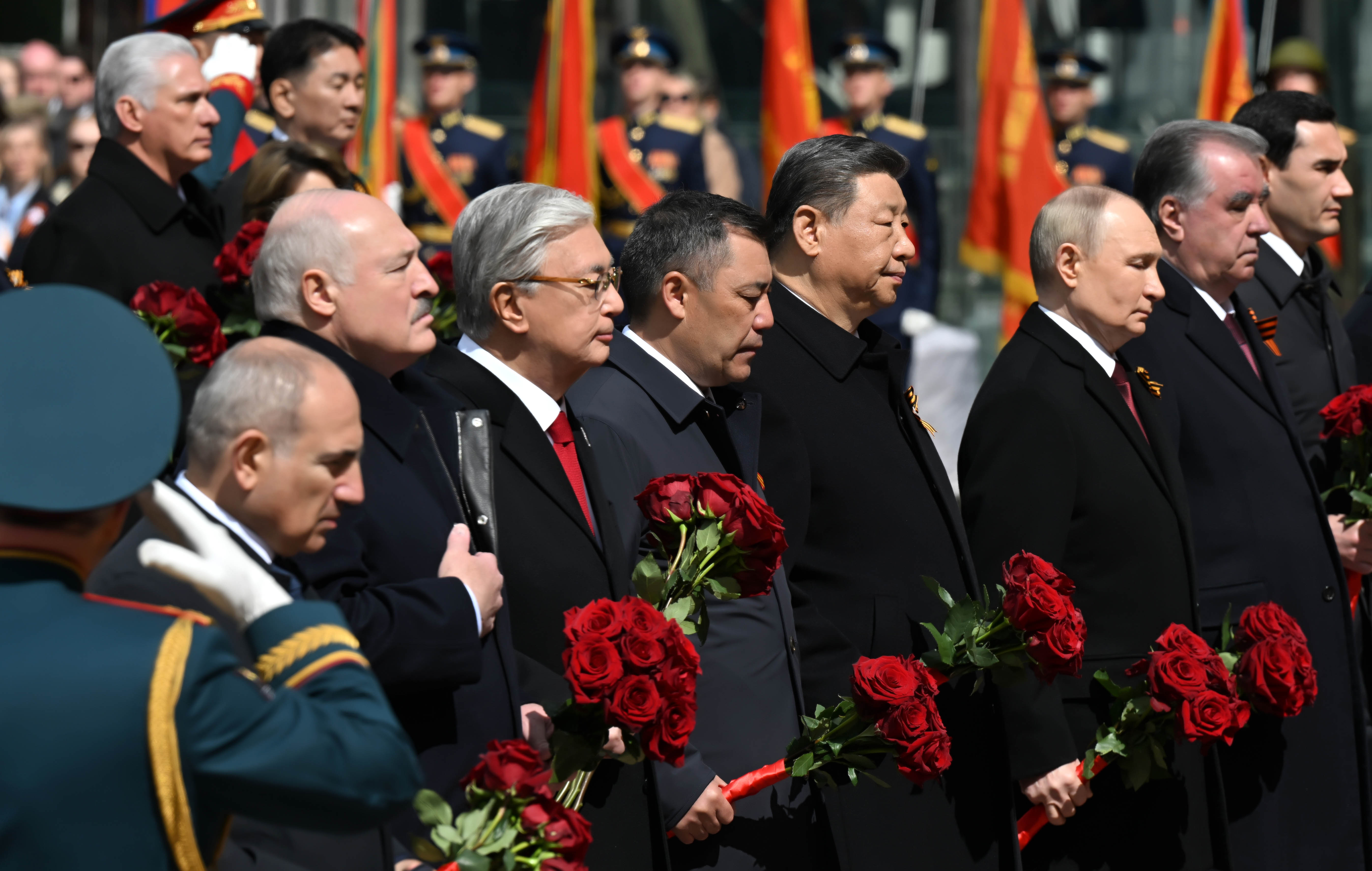
On August 31 and September 1, 2025, the world’s attention was drawn to the 25th Summit of the Shanghai Cooperation Organization (SCO), held in Tianjin, China. Hosted by Chinese President Xi Jinping, the event was attended by the heads of all ten SCO member states, including the leaders of Belarus, India, Iran, Kazakhstan, the Kyrgyz Republic, Pakistan, the Russian Federation, Tajikistan, and Uzbekistan. The SCO+ format also brought together leaders of observer states such as Mongolia, dialogue partners Azerbaijan, Armenia, Cambodia, the Maldives, Myanmar, Nepal, Türkiye, and Egypt, as well as the heads of executive bodies of the UN, SCO, CIS, ASEAN, CSTO, EEC, CICA, ECO, and AIIB.
Amid growing calls for multilateralism and more inclusive global politics, coupled with US President Trump’s tariff policy, the recent summit was widely seen as another showcase of the global shift toward the East in shaping international governance. The meeting between the presidents of China, India, and Russia was presented as a revival of the pre-Ukraine war bonhomie, implicitly challenging the Western-biased distribution of power. The participation of other regional powers, such as Türkiye, further increased interest in the summit platform. To some, the gathering of emerging leaders reflected the rise of the Global South. To others, it underscored China’s leadership ambitions in global governance restructuring. Either way, the summit was considered as a counterbalance to the G7-led global order, as it brought together twenty heads of state from the developing world.
Indeed, the SCO summit serves as an effective platform for discussing global affairs from a Eurasian perspective. In comparison with the BRICS format—which also attracted global attention last year by bringing together major emerging leaders—the SCO is more explicitly centered on Eurasian states, with leading powers of the region at its core.
Beyond the geopolitical importance of attracting such a vast number of regional leaders, the summit also demonstrated that the SCO mechanism—long met with skepticism—functions efficiently. This was reflected in the Tianjin Declaration and the SCO Development Strategy 2035 [Diritto pubblico, 2025]. In particular, the final declaration acknowledged the major global events of the year, including the escalation of the Palestinian–Israeli conflict, the humanitarian disaster in the Gaza Strip, and the military aggression against Iran by Israel and the United States. Through this statement, the member states condemned the actions of major powers that risked further escalation in the Middle East.
The SCO signatories also called for reforms of the United Nations, including the Security Council, in order to strengthen the representation of developing countries in UN governance and promote a more equitable system of global governance.
Combating the “three evils” of terrorism, extremism, and separatism has traditionally been a core priority of the organization. The summit reaffirmed its commitment to addressing these security threats as one of the traditional pillars of the organization. As a practical step, agreements were signed to establish the Comprehensive Center for Responding to Security Threats and Challenges and the SCO Anti-Drug Center, along with a proposal to create a Strategic Security Research Center. The decision to locate these centers in Tashkent and Dushanbe respectively highlights the centrality of regional security to the SCO’s agenda, while at the same time implicitly elevating the voice of Central Asian states within the organization’s institutional framework. Other security-related issues, including border defense and cooperation, were also discussed.
In addition to political and security concerns, SCO members placed strong emphasis on economic cooperation as a foundation for regional resilience. Therefore, enhancing economic cooperation was another central theme of the summit. In the context of ongoing tariff wars, member states expressed interest in diversifying their markets and deepening economic ties within the SCO framework. To this end, discussions focused on mechanisms for trade facilitation and strengthening economic cooperation through support for the SCO Member States Local Leaders Forum and the SCO Business Council. Cooperation was also emphasized within international organizations in which SCO members participate, such as the Eurasian Economic Union and ASEAN, along with initiatives aimed at establishing a “Greater Eurasian Partnership.” All but India acknowledged the importance of the Belt and Road Initiative.
Member states underscored the importance of investment cooperation and reforming international financial institutions, reflecting their shared interest in reshaping the global financial order. The initiative to establish an SCO Development Bank was presented as a significant step in this direction. The SCO Economic Think Tank Alliance was also highlighted for its plan to create a Financial Think Tank Network, which could serve as a platform for generating alternative policy ideas and strengthening financial coordination among member states.
The importance of scientific and technological innovation was likewise reinforced, with a particular focus on digital development and artificial intelligence. At a time of rapid advancements in AI, the participation of China—a global leader in the field—was noted as an opportunity for SCO members to strengthen cooperation, enhance technological capacities, and collectively play a more prominent role in shaping the AI sphere.
Strengthening people-to-people cooperation represents another important dimension of the SCO’s activities. Member states reaffirmed their commitment to expanding cooperation among SCO universities and expressed strong support for deepening collaboration in tourism, sports and cultural exchange.
Altogether, the summit demonstrates that the SCO continues to adhere to its traditional areas of focus—security, economic cooperation, and people-to-people exchanges—as the core pillars of its engagement. While skepticism remains regarding the effective implementation of sensitive issues, such as intelligence-sharing and joint strategies against the “three evils,” particularly given the presence of long-standing rivalries between the member states, notable progress has nonetheless been made. Meanwhile, doubts about the SCO’s effectiveness—stemming from its diverse membership—are gradually diminishing in light of the pragmatic need for collaborative action in an evolving geopolitical environment. Besides, emerging fields such as artificial intelligence, education, science, and innovation, where some member states already possess global leadership, provide new opportunities for collective initiatives and help mitigate internal differences.
Efforts to enlarge the organization’s membership nevertheless encountered certain obstacles. While the Lao People’s Democratic Republic was unilaterally granted the status of dialogue partner, disagreements arose over the issue of full membership for other countries. Specifically, Azerbaijan and Armenia—two post-Soviet South Caucasian states with close partnerships with many SCO members—were not admitted despite their expressed interest. Azerbaijan’s application was blocked by India at Russia’s request, while Armenia’s bid was opposed by Pakistan [Ostiller, 2025; EADaily, 2025]. It is worth recalling that the SCO underwent its first expansion in 2017 with the admission of India and Pakistan as full members. This was followed by Iran’s accession in 2023, while Belarus was officially granted full membership in 2024. The participation of Azerbaijan and Armenia could have strengthened the Central Asian agenda within the SCO. Yet, due to predictable challenges stemming from their complicated relations with certain member states, the expansion did not take place this time.
The summit also functioned as an important platform for personal diplomacy among leaders. On its sidelines, the leaders of China and India held direct talks for the first time since the Galwan border clash, which had disrupted the so-called “Wuhan spirit” of their earlier engagement. The trilateral discussions among the leaders of China, India, and Russia also drew considerable media attention, fueling speculation about possible strategic scenarios. Furthermore, the subsequent Victory Day parade in Beijing—attended by the majority of summit participants—was perceived as reinforcing China’s global leadership diplomacy. The fact that the SCO facilitated this convergence added further visibility to the organization and strengthened its appeal to external partners.
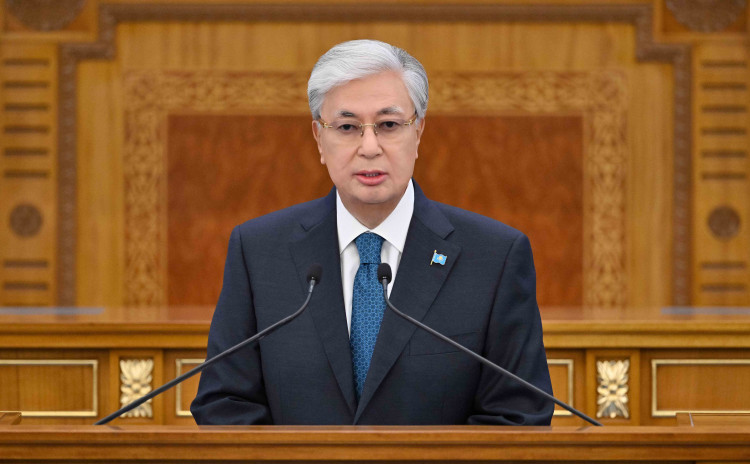
For Kazakhstan, the SCO represents a strategic direction in its foreign policy. As one of the SCO’s founding members, Kazakhstan has consistently underscored its weight within the organization through its active diplomacy and position as the regional leader of Central Asia. At this summit, Kazakhstan’s presence was reinforced not only by President Kassym-Jomart Tokayev’s high-profile participation but also by the involvement of senior Kazakh representatives heading multilateral organizations: SCO Secretary-General Nurlan Yermekbayev, CSTO Secretary-General Imangali Tasmagambetov, and CICA Secretary-General Kairat Sarybay.
During the summit, particular attention was given to the role of President Kassym-Jomart Tokayev. His prominent positioning alongside Chinese President Xi Jinping at key events underscored both Kazakhstan’s importance in China’s foreign policy and the personal rapport between the two leaders. This symbolic gesture reinforced Kazakhstan’s image as a pivotal partner for China, not only within the SCO framework but also in broader Chinese–Kazakh relations.
The summit also served to enhance Kazakh–Chinese relations. President Kassym-Jomart Tokayev’s official visit to China within the framework of the SCO summit resulted in the conclusion of new business deals worth over $15 billion. These outcomes were made possible through agreements signed between more than 100 Kazakh and Chinese companies [Zakon, 2025].
Overall, the SCO has evolved into a strategic Eurasian platform for promoting and sustaining multilateral diplomacy, while addressing urgent regional and global issues. Centered on regional security and prosperity, the SCO primarily serves as a forum that brings together the continent’s leading emerging powers to seek solutions to vital regional challenges. Despite frequent speculation about anti-Western bias, the SCO remains focused on fostering regional approaches that ultimately shape the global agenda. It also stands as an example for other regions in consolidating the efforts of regional powers to strengthen collective security and cooperation.
References:
Diritto pubblico (2025). Full Text: Tianjin Declaration of the Council of Heads of State of the Shanghai Cooperation Organization. Retrieved from https://dirittocinese.com/2025/09/02/full-text-tianjin-declaration-of-the-council-of-heads-of-state-of-the-shanghai-cooperation-organization/. Accessed on 10.09.2025.
Ostiller, Nate (2025). Azerbaijan claims Russia helped India block SCO membership bid. Retrieved from https://oc-media.org/azerbaijan-claims-russia-helped-india-block-sco-membership-bid/. Accessed on 10.09.2025.
EADaily (2025). Pakistan blocked Armenia's application to the SCO — the Foreign Ministry does not comment. Retrieved from https://eadaily.com/en/news/2025/09/01/pakistan-blocked-armenias-application-to-the-sco-the-foreign-ministry-does-not-comment. Accessed on 10.09.2025.
Zakon (2025). Over $15 Billion in Investments: What Tokayev's Visit to Beijing Will Bring. Retrieved from https://www.zakon.kz/politika/6489271-bolee-15-milliardov-dollarov-investitsiy-chto-prineset-vizit-tokaeva-v-pekin.html. Accessed on 10.09.2025.
Note: The views expressed in this blog are the author’s own and do not necessarily reflect the Institute’s editorial policy.